

The Mind, Brain and Behavior Research Center (CIMCYC) of the University of Granada (UGR) is dedicated to excellence in research in Psychology and related scientific fields.
We bring together researchers committed to the study of the brain, the mind, and individual, group, and social behavior, using both established and innovative methodologies. The CIMCYC provides a dynamic environment for training and professional development to approximately 200 people who collaborate with regional, national, and international researchers.
Maria de Maeztu Unit of Excellence
The Mind, Brain and Behavior Research Center was accredited in 2024 as a Maria de Maeztu Unit of Excellence by the Spanish State Research Agency of the Ministry of Science, Innovation, and Universities.
Facilities
CIMCYC is home to a Magnetic Resonance Unit available to all research staff (subject to compliance with the Unit's requirements and regulations). The scanner is a Siemens Prisma 3T equipped for audio presentation, video projection (via a mirror or 3D glasses), response recording, and the simultaneous recording of EEG/fMRI and eye movements.
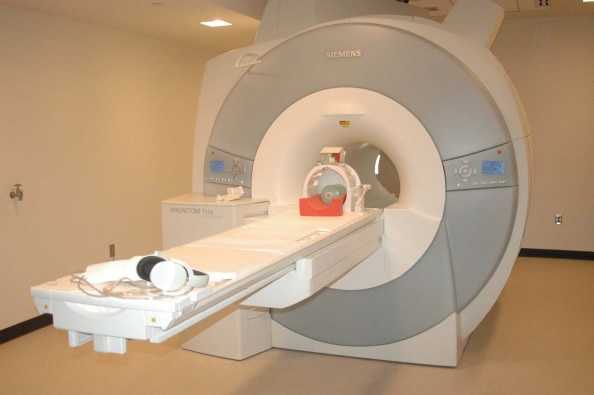
In addition to MRI, CIMCYC has a wide range of equipment for EEG recording (Brain Vision, EGI, and Neuroscan), brain stimulation (Transcranial Magnetic Stimulation and low intensity electrical stimulation), eye-tracking (Eyelink, Facelab, Tobi), and the recording of peripheral physiological signals, as well as a broad range of tests and questionnaires. High-quality EEG recording is supported by 35 electrically shielded rooms. The center also has an additional 200 data-collection cubicles. Together, this equipment is essential for obtaining a comprehensive picture of behavior, cognition, and brain function.
The center also includes multiple offices, meeting rooms, and social spaces for doctoral students, postdoctoral researchers, and visiting scholars.
About the Center
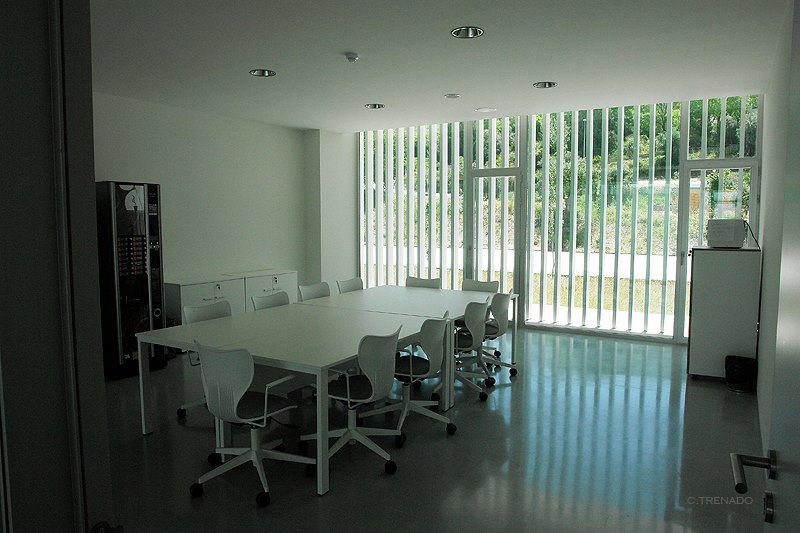
The Mind, Brain and Behavior Research Center (CIMCYC) opened in 2013, when a core group of researchers from the Faculty of Psychology moved their equipment into a new building on the Cartuja Campus of the University of Granada (near the baroque Cartuja Monastery of Granada).
This was made possible through funding from the European Union's ERDF program, which supported both the construction of the building and the acquisition of furniture. Additional European funding from the ERDF later enabled the installation of a Magnetic Resonance Imaging scanner. Subsequent funding from national and regional sources has further expanded the shared equipment available to all CIMCYC members.